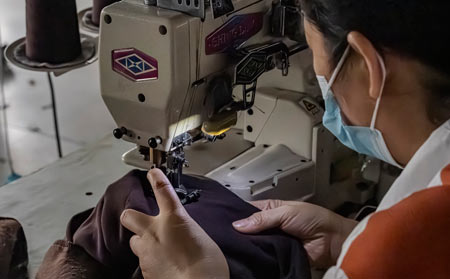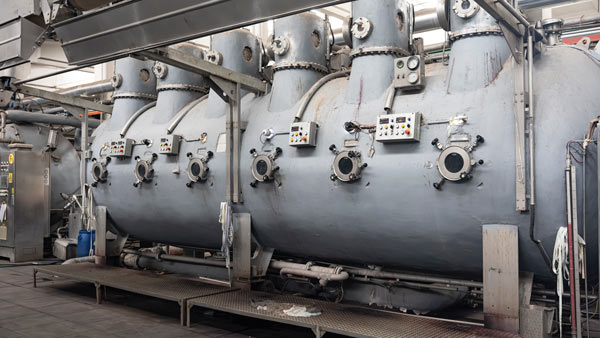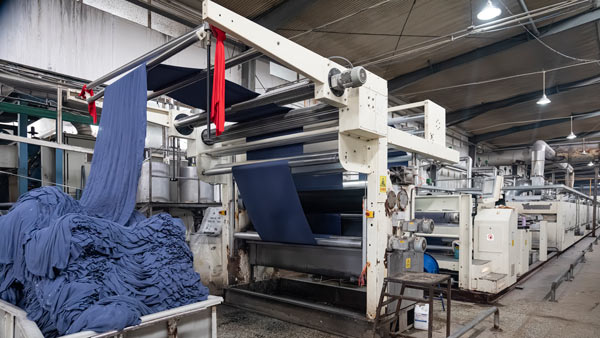

Traditional manual garment workshops face common pain points: scattered material transfer, long waiting hours between sewing stations, disordered semi-finished-goods storage, which drag down overall delivery speed. Upgraded with modern hanging production line, garment factories achieve visible improvement on lead-time management, according to production data shared by Qingdao Jincheng Hua’an International Trade Co., Ltd. for overseas sourcing partners.
In professional knitwear manufacturing, semi-finished knit pieces are easy to deform during manual carrying. Automated rail systems transport cut fabric panels directly from cutting tables to each sewing workshop workstation. Operators focus purely on stitching work instead of moving piles of garments around. Unnecessary handling steps are cut down significantly, and fabric distortion caused by rough transport gets largely avoided.
Direct benefits show in production efficiency. With well-tuned workflow optimization, daily output capacity rises without expanding headcount. For a typical bulk apparel order over 100,000 pieces, controlled material circulation shortens total lead time by 10-15 percent. This improvement delivers huge value for foreign brands facing compressed seasonal fashion cycles.
However, advanced equipment alone cannot create good results. Factories must train operators for standardized operation and carry out regular equipment maintenance. Mis-operation may cause garment scratching or rail jams, which interrupt whole production rhythm. Qingdao Jincheng Hua’an combines hardware upgrade with internal process SOP to maximize equipment value.
Many small-volume clients worry automated lines only suit super-large orders. Actually modern hanging systems support flexible switch between big batches and mixed small runs. Today more global buyers prioritize factories with systematic workflow rather than only chasing cheap quotations. Stable delivery, controlled defect rate and transparent workshop management become major evaluation indicators during supplier audits.